asdas
Product Updates
FEBRUARY 23, 2026

3BL Content Editor: Formatting, Media & HTML Specifications

This guide provides a comprehensive overview of how the editor works, what it supports, and how to maximize performance and discoverability using structured content.


This guide provides a comprehensive overview of how the editor works, what it supports, and how to maximize performance and discoverability using structured content.

The 3BL Editor is a structured, HTML-based publishing environment. Formatting is not decorative — it is a technical decision that affects how content is rendered, indexed, and distributed.

Character Limits

  • Headline: 255 characters
  • Subheadline: 255 characters
  • Body: No limit
  • Short teaser previews (email distribution): 280 characters

Supported HTML Elements

Content Sanitization & Unsupported Elements The editor automatically removes unsupported or unsafe elements, most commonly:

  • Special characters, emojis, math symbols
  • <div> (except for specific oEmbed use cases) 
  • <span> 
  • <video>
  • <audio>  
  • <iframe>

Before vs After: Enhanced Formatting Example The following example illustrates how structured formatting with multimedia improves clarity, rendering consistency, and semantic hierarchy – overall improving how readers interpret the story.

Rich Content & Performance Considerations Rich content is more than just visual enhancement, it affects rendering behavior, how information is consumed by search engines, accessibility, and consistency distributed across channels.

  • Your headline should clearly communicate what the content is about in less than 60 characters.
  • Use the description to add context about why this topic matters and why your organization is positioned to speak about it.
  • Within the content, the first header (H1) should mirror your headline, using words that communicate authority or nod toward search intent where relevant (i.e., “how,” “why,” “answered,” “explained”).
  • Secondary headers (H2, H3) help break up your content and transition from one topic to the next, which is more readable to robots than a long block of text.
  • Keep each section modular, using short and self-contained sections with one clear idea to avoid long, blended paragraphs covering multiple topics.
  • Add descriptive alt text to images to help visually impaired readers and AI systems interpret the visuals you use.

Read more about 3BL’s framework for optimizing content in our 2026 LLM and Generative AI Writing Guide

The 3BL Content Editor gives marketing, communications, and PR teams the creative flexibility to produce rich, multimedia-driven stories—while ensuring content is structured, sanitized, and distributed consistently across 3BL’s network of 79 partner sites.

Talk to our team

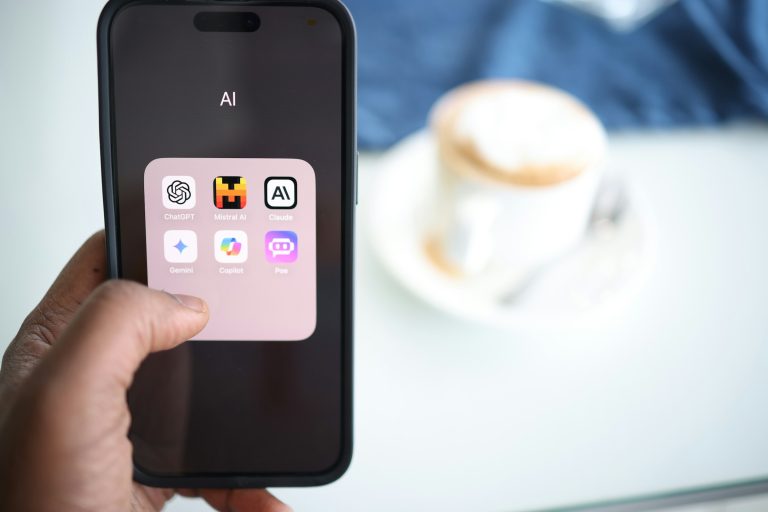
man holding a phone open to a folder of AI tools like ChatGPT Gemini and Claude with a cup of coffee and desk in the background — the shift from search to query intent online
Industry Insights
FEBRUARY 17, 2026

The Evolution of Search: From Keywords to Generative Intelligence – and a New Definition of Visibility

For three decades, search has operated on a simple premise: match queries to pages and rank them.


For three decades, search has operated on a simple premise: match queries to pages and rank them.  But the way that matching happens has changed drastically over the past three decades and that evolution is now reshaping how brands are discovered, summarized, and represented.  History of Search Search didn’t become intelligent overnight. It evolved in stages – each building on the last moving from simple word matching to contextual understanding and now generative synthesis. 

  • 1990 – Keyword Matching
    Search engines crawled the web and ranked pages based on exact keyword overlap and word proximity. If the keywords appeared, the page ranked higher.

    Search was literal. It matched text, not meaning.

  • Early 2000s – Statistical Relevance (TF-IDF)
    Algorithms began weighting terms by importance, measuring how frequently words appeared in a document relative to the broader web.

    Search became smarter about importance — but still didn’t understand intent.
  • Late 1990s–2000s — Authority Signals (PageRank)
    PageRank introduced link analysis. Instead of evaluating just the words on a page, search engines measured how many other credible sites linked to it. Links acted as votes and authority became quantifiable.

    Search evolved from “find the words” to “find the most authoritative page containing the words.”

  • 2010s — Context and Personalization
    Search engines incorporated user signals and contextual understanding to better interpret intent and refine results. A query like “dog park” automatically returned nearby parks — even without specifying a city.

    Search started interpreting intent — not just matching text.

  • 2019 and Beyond — Transformer Models (BERT, MUM)
    Language models enabled deeper semantic understanding of natural language queries and relationships between words, improving intent detection and relevance — especially for conversational queries.

    Still, the interface remained the same: a ranked list of links.

  • 2023–Present — Generative AI and LLM-Based Search
    Instead of returning links, AI-powered search systems now generate answers. Using Retrieval-Augmented Generation (RAG), they interpret the query, retrieve semantically relevant content, and synthesize a response grounded in that material.

    Search moved from retrieval to representation.

Writing Content for LLMs
Content quality has become increasingly important – both in the words themselves and how stories are structured.  AI systems don’t “read” content the way humans do;  they scan structure and relationships within the underlying HTML to understand hierarchy and meaning. Clear H1/H2/H3 headers, strong header-body relationships, and self-contained sections aren’t just good editorial practice – they’re signals that help machines correctly interpret what content is about and increase the likelihood it’s retrieved in the first place. 

LLMs process text by turning words into numerical representations (vectors) and mapping relationships between them using mechanisms like “attention.” The closer the wording mirrors how people naturally ask questions, the more likely the content is to align with the prompt and be incorporated in the generated answer. The goal is to anticipate not just the first question a user might ask, but also the likely follow-ups. These systems are conversational by nature, and content that addresses second- and third- order questions has a stronger chance of appearing multiple times within a single thread.  Authority is another major factor. Over time, AI models build an understanding of organizations based on consistent patterns across the web. When a company’s name, leadership, and initiatives are accurately reinforced across multiple credible sources, the model forms stronger associations and deeper trust – and is more likely to surface that organization in relevant responses.

Distribution and Signals of Visibility
This is where 3BL’s role becomes especially relevant. Distribution through 3BL places an organization’s content on a trusted third-party platform, creating the cross-source reinforcement that strengthens an AI model’s association between a brand and its key narratives – a strategic middle ground between a traditional press release and owned channels.  While direct attribution data in generative environments is still emerging industry-wide, there are measurable signals that this approach is working. 3BL tracks when major AI crawlers access client content, and that activity is consistent – an early but meaningful indicator that distributed content is entering the knowledge system these models draw from. 

Looking ahead, 3BL’s research team is actively developing analytics built for the generative era: visibility scoring, mention rate, share of voice within AI responses, and query intent attribution. The organizations investing in structured, well-distributed content now are the ones most likely to show up when it matters.  In a world where AI synthesizes the answer before a user ever clicks a link, visibility belongs to the organizations that built their presence before the question was asked.

(Image: Solen Feyissa/Unsplash)

Talk to our team

two robots reading from a computer — symbolizing AI-friendly website copy and AIO — 3BL guide to AIO and GEO
Industry Insights
FEBRUARY 17, 2026

How to Optimize Your Content for LLMs and Generative AI: 3BL’s 2026 Guide


Generative artificial intelligence and large language models (LLMs) are transforming how people access information and changing which sources are viewed as trusted enough to be shown. Traditional SEO, built by page rankings and keyword optimization, has expanded into AIO (AI Optimization) and GEO (Generative Engine Optimization), where the goal isn’t just to rank but to be retrieved, understood and cited by AI systems in their chats with human users. Where people once searched their questions in Google and clicked on a handful of websites to find the best answer, they’re now asking AI chatbots to do the searching for them and deploying AI agents to complete increasingly complicated tasks. Beyond simply finding answers, people are using agents to build decks, write code, automate customer experiences and organize data, with little to no human involvement. 

As amazing as that is, it’s a big change for communicators looking to maintain brand visibility online. Gartner forecasts up to a 25% drop in traditional web searches this year compared to two years ago, and up to a 50% hit in organic search traffic by 2028, as more people embrace chatbots over search engines. 

The challenge for communicators is ensuring your organization’s expertise is referenced within AI-generated answers, rather than being buried behind them. This is less about manipulating algorithms than about earning trust and building retrievability.  At 3BL, we’ve helped more than 1,500 companies and nonprofits tell their stories online — from the early days of Twitter chats and live Google Hangouts, to engineering for AIO and GEO today. While we do the work in the back-end to make sure our clients’ content is well-structured and readable to AI systems, here’s what we tell them about how to format their articles, press releases, and other content for AIO and GEO.

Inside the Machine: How LLMs actually find and use information 
To optimize for AI, we need to understand how AI systems “think,” or how they find and process information. At the heart of AI visibility is RAG: Retrieval-Augmented Generation. Here’s what that means, in plain English:

  1. Retrieval: AI-powered search experiences pull relevant and recent information from trusted sources such as researchers, nonprofits, government websites, and news providers like 3BL.
  2. Augmentation (Grounding): The system blends what it retrieved from the first step with its model training data so the response is based on real source material rather than memory alone.
  3. Generation: The model writes an answer for the user based on a mix of retrieved content, pretrained knowledge and the user’s query.

In other words, visibility in AI comes down to:

Retrievability + Authority + Structure. 
This is what’s often referred to as “RAG-ready content.” It’s legible to both machines and people. The good news for communicators is that a lot of the things we already do to tell great stories are also good for AIO and GEO, and a few intentional tweaks can make a big difference. 

Writing for AIO and GEO: Designing content that works for both humans and machines
On today’s internet, you’re really writing for two audiences: the human user (i.e., your target audience) and the AI chatbot that is more and more likely to be assisting them. Think of your content as two-layered: It’s organized in a way that can be parsed and referenced by AI systems, but it still reads naturally to people.  

Writing for people is second nature to communicators, but what about writing for robots? It may sound foreign, but it’s not as different as you may think. Checking these six boxes can help. 

Structure your content with intention. 
AI systems see the headline, description snippet and headers as key pieces of information to determine how your content can be used to answer people’s questions and perform tasks.  Lead with the answer or most important point first, then add context, citations, examples and storytelling that connects with the reader while still being easy for AI systems to parse.

  • Your headline should clearly communicate what the content is about in less than 60 characters. 
  • Use the description to add context about why this topic matters and why your organization is positioned to speak about it.  
  • Within the content, the first header (H1) should mirror your headline, using words that communicate authority or nod toward search intent where relevant (i.e., “how,” “why,” “answered,” “explained”). 
  • Secondary headers (H2, H3) help break up your content and transition from one topic to the next, which is more readable to robots than a long block of text. 
  • Keep each section modular, using short and self-contained sections with one clear idea to avoid long, blended paragraphs covering multiple topics. 
  • Add descriptive alt text to images to help visually impaired readers and AI systems interpret the visuals you use. 

Formats like Q&As and lists are also more likely to rank in AI search because they speak directly to people’s questions and provide valuable information in response. For example, consider reformatting the next executive op/ed on your content calendar from a long thought piece into a Q&A that showcases their expertise in a digestible and discoverable way, or talk about your next big program launch in a list that’s oriented toward solving problems. 

Add substance to improve visibility.
Including quotes, statistics and links to sources not only makes your content more valuable and trustworthy to human readers, but it can also increase visibility in AI queries by up to 40%, according to an analysis of 10,000 real searches. When citing a source or mentioning an announcement, be clear about time orientation (i.e., “as of 2025”) to inform readers and signal recency to AI systems. 

Use a clear and authoritative tone. 
An eye toward clarity in your writing helps engage human audiences and showcases answer density to AI systems. 

  • Clearly define the industry or topic-specific terms you use, and break down steps explicitly to help both humans and robots follow along. 
  • Avoid the passive voice (subject, past participle, object, i.e., “mistakes were made”) in favor of declarative statements (subject-verb-object, i.e., “cats are mammals”).
  • Where your organization has authority to speak on a topic, use an authoritative tone to communicate this to your audience as well as their AI assistants. 

Mention your brand and focus topic, but not too much. 
Just like with SEO, keyword optimization is helpful, but keyword stuffing is not. Including explicit details like company names, platforms, frameworks, products, people, and locations helps give valuable context to both human and machine, but mentioning keywords too much can be a red flag to AI systems. Aim to keep your core keywords below 3% density (about five mentions in a 600-word article). This goes for your brand name, too. Mention it once in key areas like your headline, description, H1 header and first paragraph where applicable, but avoid overuse by incorporating synonyms elsewhere (i.e., “our,” “us,” “we,” “our team”). 

Foster content hubs to build credibility and brand association. 
Create “hubs” for the topics you’d most like to be known for, such as a page on your website, a category of your blog or a campaign in your 3BL newsroom.  Update these pages as you publish relevant content, and link back to them often so crawlers associate your brand with these topics and begin to see you as a trusted source for information about them. 

Publish to trusted domains.
As well as on your own website, publishing to trusted domains and syndicating to distribution networks like 3BL’s is shown to improve AI visibility. AI systems read laterally across the internet, meaning the more your content is out there and in trusted places, the more likely it is to be cited in chats. 

The bottom line
Writing for AIO and GEO isn’t all that much different from writing good content for human audiences. But it does call for communicators to be intentional about clarity and structure in their writing and strategic in how and where they publish.  You can’t buy placement in AI answers (yet), but you can earn it by providing valuable information often and proving your organization is a source AI systems can depend upon for answers.  Still have questions about writing for AIO or how 3BL can help? Get in touch below. 

(Image credit: Mariia Shalabaieva/Unsplash)

Talk to our team

Product Updates
FEBRUARY 5, 2026

Changelog


3BL’s Changelog is a running list of product improvements, outlining what changed and why it matters. When we launch something big, you’ll see it noted here with a link to a full release post.


August 21, 2026

Moments Ahead Calendar — Now Available to All Clients

The Moments Ahead Calendar is now available across all client accounts. Plan ahead with forward-looking events and moments relevant to your industry.

Why it matters: Staying ahead of key dates, awareness days, and industry events helps you plan timely, relevant content that resonates with your audience.

Read the official press release

August 7, 2026

Featured Image Improvements

We’ve improved how featured images work across the platform — from upload to distribution.

What changed:

  • Featured images now reliably sent to CSRwire and ReportAlert
  • Fixed featured image layout on widgets
  • Content mailer recipients now display the correct image
  • Featured image upload limited to 10MB with clearer guidance

Why it matters: Your featured image is often the first thing audiences see. These fixes ensure your chosen image appears correctly everywhere your content is distributed.

Read about why featured images matter on the product blog

July 31, 2026

AI Visibility is Now Generally Available

AI Visibility Tracker has officially launched and the tool is now a core part of the platform.

Why it matters: As more people turn to AI assistants for research and recommendations, visibility in AI chats is a meaningful driver of brand recognition, reputation, and trust.

July 31, 2026

Inline Media & Widget Fixes

Fixed several issues affecting embedded video and media in widgets.

What changed:

  • Fixed inline video poster images not displaying
  • Fixed YouTube embeds not loading in widgets
  • Resolved embed issues in AccessWire widgets
  • Enabled CORS on 3blcdn.com for reliable media loading

Why it matters: Rich media makes your content more engaging. These fixes ensure videos and embeds display properly across all distribution endpoints.

July 28, 2026

Content Editor & Media Management Updates

We’ve refined the content editing experience with better media controls and a cleaner form layout.

What changed:

  • Combined media button for simpler uploads
  • Multimedia section now visible to employees and clients
  • Updated “Additional Media” section naming for clarity
  • Industry field updated to multi-select with expanded taxonomy
  • Form views tailored for Admin, Employee, and Client roles

Why it matters: A more intuitive editing experience means less time managing content and more time telling your story.

Read about streamlined media management on the product blog

July 28, 2026

AccessWire Content Recovery

Content affected by the AccessWire outage has been restored.

What changed:

  • Batch 1 content automatically retried and redistributed
  • Batch 2 content (requiring client approval) processed and restored
  • Industry and topic mappings corrected for AccessWire

Why it matters: All affected content has been fully redistributed to ensure your stories reached their intended audiences.

July 24, 2026

Group content hub

All assets for an account are now accessible from a single hub — images, video, audio, and embeddable links — all in one place. One button now handles all inline media types which means less clicking and a cleaner toolbar.

July 9, 2026

Featured image standardization is underway

A dedicated featured image section now sits above the Headline field. Upload an image, add alt text, and see a preview before publishing. Clear file type and size guidance is included to reduce upload errors. Read more about 3BL’s editor specifications in our knowledge base.

June 25, 2026

Edit button in preview mode

You can now flip between preview and edit mode directly from the top menu — no more navigating away to make a quick change.

June 5, 2026

Streamlined Account & User Pages

The account and user settings pages have been cleaned up. Unused fields have been removed, Industry and Ticker are now required fields, and filters have been simplified for faster navigation.

The user creation page has been simplified with clearer labels, updated help text, and a tighter set of required fields.

May 29, 2026

Typography Update & Brand Refresh

Headings across the platform now use a consistent typeface that aligns with the 3BL brand for a cleaner, more modern reading experience throughout. Additionally, the platform and analytics themes have been updated to match our brand guidelines.

May 15, 2026

Navigation & Branding updates on 3blmedia.com

We’ve updated the site navigation — “Client News” is now labeled “Newsroom” — and refreshed the headline and navigation on 3blmedia.com. These changes bring the site language in line with how we talk about our products today.

May 5, 2026

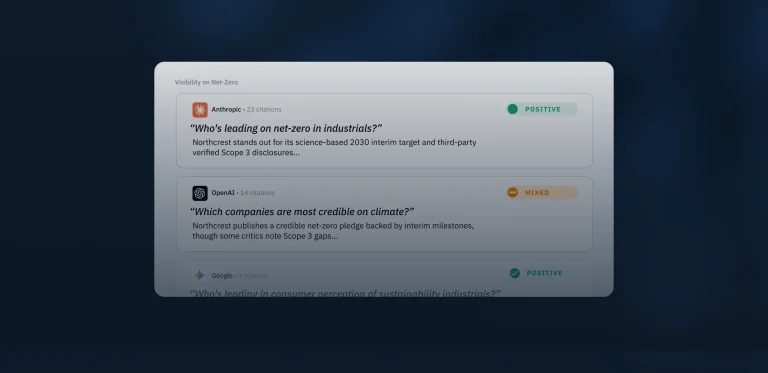
AI Visibility Tracker is a net new feature allowing brands to measure their visibility across four major platforms.

What changed:

  • Added a new feature (currently in Beta)

Why it matters: As more people turn to AI assistants for research and recommendations, visibility in AI chats is a meaningful driver of brand recognition, reputation, and trust. Learn more.

April 30, 2026

Updated access control settings to strengthen our security.

April 23, 2026

Updated content categories to better align with 2026 best practices and standards. Our Content Categories Got a Refresh — Here’s What’s Changing

April 17, 2026

Added support for captions on multiple featured images.

March 19, 2026 

llm.txt was rolled out for all content published through 3BL.

What changed:

  • Added support for llm.txt to help LLM’s more easily access and read client’s content

Why it matters: llm.txt ensures your published content becomes more legible to AI systems increasingly mediating how stakeholders discover and evaluate brands. 3BL LLM Visibility: AI Content Indexing and Discovery.

March 12, 2026 

3BL’s Audience Analytics Dashboard got a major upgrade– adding deeper insights into professional, demographic, and geographic data. 

What changed:

  • Added additional dimensions to data
  • Added blended charts to cross-examine cohorts of readers

Why it matters: Audience analytics are most valuable when they inform how teams plan, publish, and evaluate their work, and when used consistently, these insights help teams move beyond simple performance metrics toward a deeper understanding of how their content reaches and engages the audiences that matter most. 3BL Audience Analytics Dashboard: Professional, Demographic, and Geographic Insights.

February 26, 2026 

Bug Fix: Email Distribution 
Fixed a CSV formatting issue with imported email distribution lists. 

Bug Fix: Inline Media for Widgets 
Fixed a CSS issue with inline media consumed by widgets in our affiliate network.

February 24, 2026 

Editor Upgrade 
3BL’s Editor got a major upgrade – adding inline images and enhanced functionality. 

What changed:

  • Confirmed supported HTML elements
  • Added inline media for rich content formats
  • Enhanced formatting and writing experience

Why it matters: Creating rich multi-media content is more compelling and can increase engagement, and helps you better tell your story. 3BL Content Editor: Formatting, Media & HTML Specifications

February 4, 2026 

Improved Audience Analytics 
Audience data now dives deeper into professional, geographical, and demographic information with the ability to cross-analyze content to audience profile. 

What changed:

  • Expanded audience information for professional, geographical, and demographical information
  • New cross-analysis between content types and topics and audience profile.

Why it matters: Knowing who is reading your content, and who is not, helps inform your communications plan to achieve your desired outcome.

Reports Page UI 
We rebuilt the reports page so it is more stable and reliable. 

What changed:

  • Report page is now embedded via external service, improving stability and reliability.
  • Updated tooltips to better articulate the contents of the report.

Why it matters: Producing reliable evidence of outcomes is important so this update makes sure you have what you need, when you need it.

Automated HTML Sanitization 
The editor now automatically strips out unsupported HTML tags when pasting content for publication.

What changed:

  • Unsupported HTML elements are removed on paste
  • Formatting is preserved for supported tags
  • Cleaner content structure without manual cleanup

Why it matters: Eliminates formatting errors and unexpected styling issues that previously required manual correction.

Inline Image Resizing 
You can now resize images directly within the editor. 

What changed:

  • Click any inline image to activate resize handles
  • Drag to adjust image dimensions
  • Changes apply immediately without leaving the editor

Why it matters: Streamline image formatting workflow — no need to edit files externally or switch tools.

Contact

Talk to our team

Lorem ipsum dolor sit amet, consectetur adipiscing elit.

Talk to our team

Industry Insights
FEBRUARY 5, 2026

15 Sustainability Communicators You’ll Actually Want To Follow In 2026


Give your feeds an upgrade in 2026 by following some of the folks we always love to see in ours.

With so many voices talking at once, it’s hard to tell if the loudest ones are right or just…loud.  Of all the sources atop your professional newsfeeds, forwarded in work email inboxes, and shared in posts liked by 10 people in your LinkedIn circle, how many of them really help, inform, and inspire you?  Give your feeds an upgrade in 2026 by following some of the folks we always love to see in ours. From thought leaders and influencers to respected authors, organizers, and corporate executives, here’s a short list of sustainability and communications mavericks who do more than talk the talk:  [MORE ON THIS BLOG: Who’s Leading the Way in Corporate Sustainability in 2025? Meet the 25 Voices to Know]

  • Ayo Sokale — A vocal and vibrant sustainability leader, Sokale bridges her careers as a civil engineer and a BBC broadcaster to improve strategies and create growth plans at her own intersection of media, engineering, and public service. 
  • Karen Y. Johns — An apt description for Johns, the bold CEO of Net Impact, is “Leader.” A champion of value-driven work, Johns continues to fight for students and young professionals just beginning in the social impact and sustainability space, and she shares their success stories and where they gain their experience on her social media feeds. 
  • Dave Armon — We may be a bit biased, but 3BL’s Executive Vice Chair is a charismatic maverick who uses his LinkedIn to showcase poignant thought leadership and journals his travels to sustainability conferences, conversations with various leaders and communications professionals, and insightful articles worth sharing across your own networks. 
  • Julia Pyper — GoopLeap’s VP of Public Affairs uses her platform of over 10,000 followers to speak vociferously on topics surrounding clean energy and complex environmental issues. 
  • Grace Vanderhei — The nuclear engineer and former Miss America 2023 has taken her crown and recycled it into a platform calling for more regulations around energy sources. Vabderhei’s LinkedIn is a megaphone for Gen Z to engage in more engineering initiatives. 
  • Faith Taylor — Kyndryl’s SCP of Global Sustainability and Social Impact is a veteran in the sustainability and leadership space. For the last two-plus decades, Taylor has championed advancing business values through clear, developmentally focused programs that prioritize people and climate responsibility. 
  • Jane Goodland — The Group Head of Sustainability at LSEG hosts the LSEG Sustainable Growth Podcast, where she covers “issues which intersect sustainability and finance,” and what they call “the biggest issues of our time,” while speaking with leaders from climate impact partners like Microsoft and more. 
  • Leah Thomas — Instagram’s resident “crafty, earthy girl next door” is the founder of the nonprofit Intersectional Environmentalist and author of “The Intersectional Environmentalist: How to Dismantle Systems of Oppression to Protect People + Planet.” Listed on Forbes 30 under 30 for young professionals, she uses her platforms to showcase thoughtful conversations with notables like Bill Nye, the late icon Betty Reid Soskin, among others. 
  • Tiffany Hardin — The trendsetting founder and CEO of Gild Creative Group consistently posts on LinkedIn, sharing relatable trends with her community to power “influencer marketing capabilities for brands who want to activate the world’s leading influential voices to strengthen consumer and community relationships.”
  • Lola Bakare — The author, executive, and owner of bc/co by Lola Bakare is a fierce advocate for responsible marketing from those who know their voices can carry change. She stands firmly that words and how they are presented matter, including her take on the NBAPA’s statement on the recent happenings in Minneapolis. 
  • Sherrell Dorsey — A former TriplePundit contributor, the TED Tech host is well known in tech and entrepreneurship. She uses her LinkedIn to promote panel conversations across the space, while utilizing popular social media trends to discuss green markets, sustainability, and the future of the workforce. 
  • Susan McPherson — The founder and CEO of McPherson Strategies is also an author who often posts job openings on her feed. 
  • Cecily Joseph — she led CR at Symantec for many years and is now on the board of Mercy Corps and the shareholder advocacy organization As You Sow. She also posts job leads as a service to her audience. 
  • Mike Barry – a sustainability stalwart, an architect of Marks & Spencer’s Plan A, among the earliest corporate sustainability policies. Since retiring from M&S, he’s remained prolific in the wellness space, launching a nonprofit last year and using his LinkedIn for job listings and conversations on hot topics. 
  • Alison Taylor — Currently a clinical professor at NYU Stern School of Business with a reputation for thoughtful work around strategy.  If you’re looking to be as informed as possible about the sustainability space and beyond, the winner of the 2024 Porchlight award for best leadership and strategy book is one to follow and turn an alert on for. 

What are your favorite impact podcasts and newsletters? Tag us and tag them when you share this post.

Talk to our team

While some communications professionals view AI as a threat, others are quickly figuring out ways to use these phenomenal new tools to turbocharge longstanding strategies and tactics that drive results. It's in that spirit that we are sharing a couple of use cases from 3BL clients.
(Source: Google Gemini AI)
Leadership Perspectives
FEBRUARY 3, 2026

Prompt Discovery Indices, AI Notices, and 3BL 

Dave Armon
Dave Armon Vice Chairman

While some communications professionals view AI as a threat, others are quickly figuring out ways to use these phenomenal new tools to turbocharge longstanding strategies and tactics that drive results. It’s in that spirit that we are sharing a couple of use cases from 3BL clients.

  • Prompt Discovery Index – One of our clients has written more than 100 prompts for top AI search engines, such as ChatGPT, Gemini, and CoPilot.  By running a monthly report, the client can see how effective her content distribution program has been in influencing generative AI to incorporate her brand’s narrative into the answers generated by AI engines. This client has an “intentional repetition” formula of using 3BL to tell stories through press releases, videos, articles, case study reports, and other formats. The goal is to show up ahead of competitors in the large language models (LLMs) used by the AI chatbots. Her “prompt discovery index” is growing every month and is now more important than the SEO reports her organization used for many years to improve visibility in search and social. 

This radical transformation in how consumers, investors, policymakers, employees and other key audiences access information is an opportunity to use 3BL’s powerful distribution network – and the fact that our clients’ content is included by LLMs – to improve trust and commercial results. [MORE: AI is Building a New Trust Economy: Will PR Be Part of It?] We would welcome the opportunity to speak with you about your challenges and map ways 3BL can become a partner as you retool to meet the moment. Image Source: Google Gemini AI 

Contact Us

Let 3BL be your guide

Talk to our team