asdas
3BL News
AUGUST 27, 2025

Who’s Leading the Way in Corporate Sustainability in 2025? Meet the 25 Voices to Know


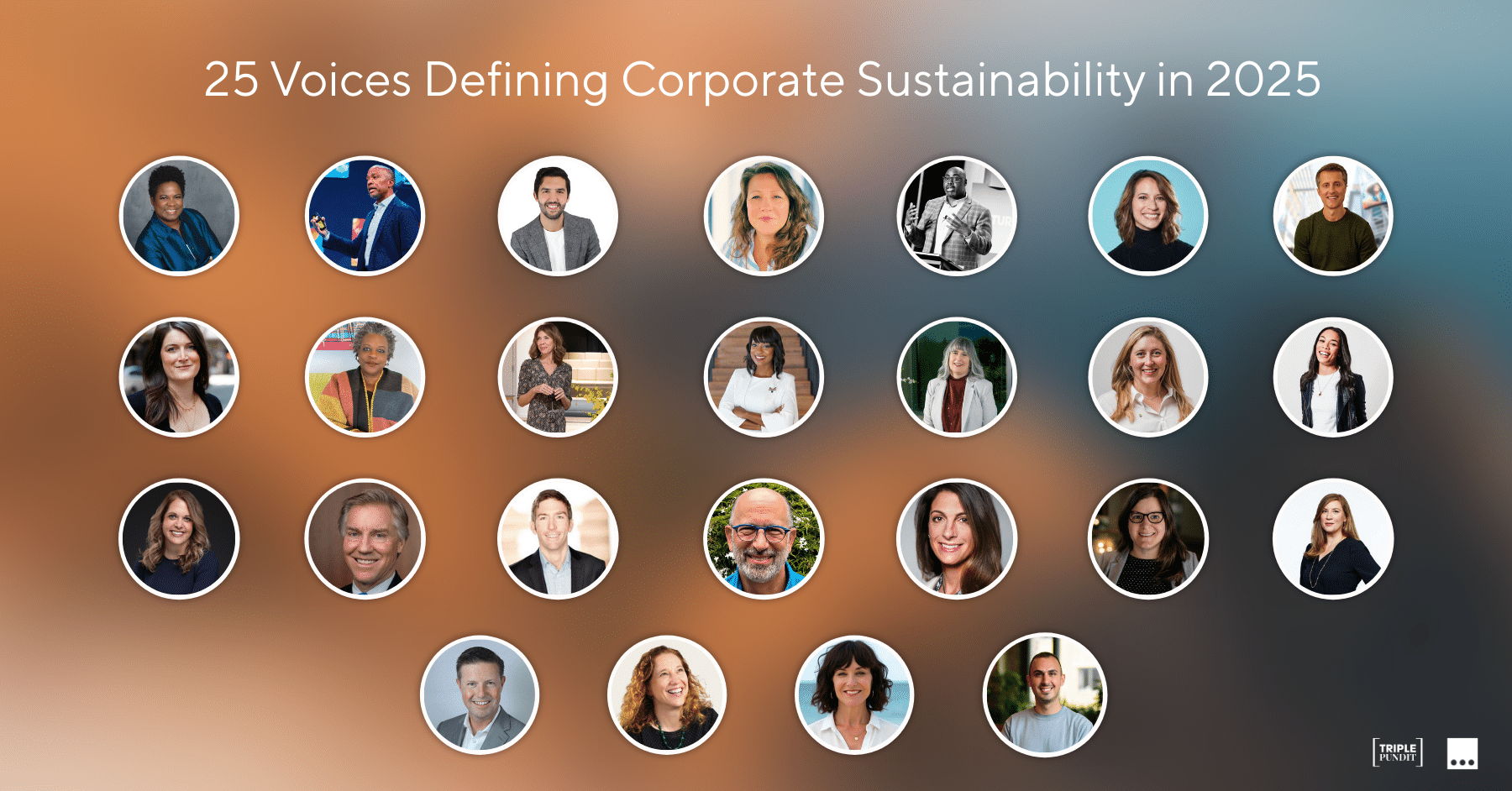
By Staff  The sustainability community has witnessed significant changes in 2025 that could impact the space long-term. But one thing we have in our pocket is this: the leadership and mentors that allow the sustainability sector to continue to do necessary work, no matter the circumstances.  That’s why we’re here. We’re proud to announce our list of 25 current voices defining corporate sustainability in 2025, as chosen by the 3BL audience on LinkedIn via nomination. From bold campaigners to CEOs to behind-the-scenes strategists, these leaders are shaping how the world understands and engages with the environment and sustainability. Selected by 3BL and featured on TriplePundit, this year’s honorees represent the communicators, storytellers, and innovators driving the narratives that matter most for business, society, and the planet. When we asked our network who’s still inspiring and informing them in the space this year, this is what they said.

Here is the list in alphabetical order: 

  1. Jessica Applegren, SVP Communications & Marketing, Palmetto
  2. Daryl Brewster, CEO, CECP (Chief Executives for Corporate Purpose)
  3. Whitney Dailey, Managing Director, Purpose, Allison Worldwide
  4. Erik Distler, VP, Global Head of Sustainability, AEG
  5. Eunice Heath, CSO, CRH
  6. Angela Hersil, VP Corporate Communications, Sustainability & Public Affairs, Zurn Elkay Water Solutions
  7. Jen Huffstetler, CSO, HP
  8. Ellen Jackowski, CSO, Mastercard
  9. Karen Johns, CEO, Net Impact 
  10. Michael Kaye, Director of Brand & Communications | Evergreen & Emerging Brands, Match Group
  11. Charmion Kinder, U.S. Olympic & Paralympic Foundation | Development Impact & Communications Director, International Olympic Committee. 
  12. Jessica Marati Radparvar, Founder, Reconsidered
  13. Michelle Marks, Managing Partner, Ideas On Purpose
  14. Samuel Monnie, Co-Founder & Co-CEO, Purpose Hive
  15. Torod Neptune, former CCO at Medtronic, is now an assistant communications professor at UNC Hussman
  16. Margaret O’Gorman, CEO, Tandem Global
  17. Nate Pepper, Vice President, Communications and Sustainability, Veolia 
  18. Jennifer Garner, Sr. Manager, Corporate Communications, Papa Johns
  19. Madeline Smith, Global Director Impact Reporting, Griffith Foods
  20. Joe Speicher, CSO, Autodesk
  21. Ambre Stanford, US Head of CAA Impact, CAA
  22. Kivalena “Kiva” Starr, Vice President Impact, Adtalem Global Education
  23. Alison Taylor, Clinical Professor, NYU Stream
  24. Antonio Vizcaya Abdo, Professor, Sustainability Consultant, LinkedIn Top Voice, and Contributing Writer, Kueponi Consultoria SC
  25. Bill Weihl, Founder and Chief Strategic Advisor, ClimateVoice

Congratulations to those named to our list, and thank you for your work in sustainability and beyond.
Talk to our team

AI is not the future — it’s here today. It powers climate modeling, improves waste management, and tracks biodiversity with unprecedented precision. (Source: Steve Johnson/Unsplash+)
Industry Insights
AUGUST 19, 2025

AI in Sustainability: Balancing Energy Demand and Climate Solutions


AI is transforming sustainability by powering climate tech, ESG strategies, and renewable energy—but its rising energy use poses new risks. Here’s how green AI can drive a sustainable future.

AI’s Role in Sustainability Today

Artificial intelligence is now central to the sustainability conversation. From climate tech to ESG reporting, AI is unlocking efficiencies across industries. But it also carries a massive energy footprint.

Data centers that power AI already consume around 415 TWh annually — about 1.5% of global demand — and could double by 2030 (Financial Times). In New York, new AI-powered facilities are straining the grid and raising electricity costs (Times Union).

This duality positions AI as both a sustainability challenge and solution.

Where AI Delivers Climate Impact

  • Renewable energy optimization: AI forecasts energy demand and supply to keep grids stable—70% of energy firms already deploy it (Onix Systems).
  • Sustainable agriculture: AI-powered drones and crop disease detection reduce pesticide use and food waste, showcased at CES 2025 (AP News).
  • Climate monitoring: AI paired with satellite and sensor data is helping track emissions, deforestation, and methane leaks in real time (Deloitte/WSJ).
  • Green materials discovery: Generative AI accelerates battery and electrolyte innovation, reshaping the clean-energy transition (Time).

These green AI applications highlight how technology can deliver sustainability gains that outweigh its carbon costs.

AI in ESG and Corporate Strategy

The organizations seeing the most progress are embedding AI directly into their ESG frameworks. Companies that strategically integrate AI report up to 10x greater success in meeting carbon-reduction targets (PMI).

PwC highlights four key areas where AI is reshaping ESG strategy:

  1. Measuring and reducing carbon footprints.
  2. Building resilient and transparent supply chains.
  3. Accelerating renewable energy adoption.
  4. Balancing growth with environmental stewardship (ESG Dive).

The Future: Regulating and Scaling Green AI

The sustainability of AI will depend on smart governance. As MIT and EY note, unchecked AI growth could undercut climate goals without sustainable AI design (MIT News, EY).

Emerging solutions include:

  • AI regulation that enforces transparency on emissions and requires sustainable architectures (arXiv).
  • Green AI systems that cut energy use by 25% and improve recycling and resource recovery (arXiv).

Why It Matters Now

AI is not the future—it’s here today. It powers climate modeling, improves waste management, and tracks biodiversity with unprecedented precision (Wikipedia).

But the paradox remains: AI can drain energy even as it drives solutions. The next phase of sustainability will hinge on how leaders, regulators, and innovators align AI’s potential with climate responsibility.

Talk to our team

(Source: Spencer Davis/Unsplash+)
Industry Insights
AUGUST 13, 2025

Gen Z and Millennials Want a Sustainable Life — And Brands That Help Them Live It


For Gen Z and millennials, sustainability isn’t an optional lifestyle choice — it’s a non-negotiable. And if companies don’t step up, these generations have no problem stepping away.

According to 3BL’s Q2 2025 report, Say Less, Risk More: Sustainability Silence is Undermining Trust, 56% of U.S. consumers — including a strong majority of younger Americans — say sustainability is important in their everyday behaviors. They’re looking for brands that make it easier to live those values, from sustainable product design to social equity commitments.

And they’re willing to vote with their wallets: 73% believe their purchasing choices can influence corporate behavior, and they will shift spending to companies that demonstrate genuine action.

Sustainability and DEI Are Linked in the Minds of Young Consumers

For younger consumers, environmental responsibility and social equity are part of the same conversation. The Q2 report shows 80% of Americans prefer to shop at companies that continue to support diversity, equity, and inclusion (DEI) initiatives, even amid political pressure to scale them back.

They aren’t hung up on whether companies use the term “DEI” or adapt the language — what matters is the substance of the work. When companies back away from these commit

ments, boycotts and backlash can follow. The report cites real-world examples where rollbacks have cost brands billions in lost sales.

The Risk of Silence

Some companies are choosing to “greenhush” — scaling back their sustainability communications to avoid controversy. The report shows a nearly 10% drop in media mentions of leading U.S. companies’ sustainability work in early 2025.

But the data makes one thing clear: silence is riskier than speaking up. Over a quarter of consumers assume companies that don’t share sustainability updates aren’t doing anything at all. And trust is already fragile, with 23% saying they “rarely” or “almost never” believe corporate sustainability claims — up from 15% just 18 months ago.

How Brands Can Build Trust with Younger Generations

The report identifies three key drivers of consumer trust:

  1. Clear, verifiable data — Show the numbers, not just the slogans.
  2. Consistency over time — Sustainability can’t be a one-off campaign.
  3. Transparency about challenges — 44% of consumers think more highly of companies that share their failures alongside successes.

Younger consumers expect brands to act as partners in their sustainability journey — helping them make more sustainable choices, while also holding themselves accountable for environmental and social impact.

Bottom Line

Gen Z and millennials are aligned on living sustainably and expect brands to help them get there. They won’t hesitate to redirect their spending to companies that keep their commitments — whether that’s in climate action, fair labor practices, or DEI.

In 2025, walking the walk is essential. But for these generations, talking about it — with evidence, consistency, and honesty — is just as important.

Download the Research Now