asdas
Underwater sunbeams, ocean depth, background particles, serene backdrop
3BL News
JULY 30, 2025

New 3BL Report Reveals Sustainability Silence Is Eroding Consumer Trust 


In a politically charged climate, staying silent on sustainability may be the riskiest move of all.

As political and legal scrutiny mounts in the U.S., many companies are scaling back public communication around their sustainability efforts. But according to new research from 3BL, the real risk isn’t saying too much, it’s saying nothing at all. Our report, “Say Less, Risk More: Sustainability Silence is Undermining Trust,” draws on media analysis and original polling to expose a growing crisis of confidence in corporate sustainability claims. The findings signal a clear warning: greenhushing may feel safe, but it’s undermining public trust and putting market share on the line. This new analysis paints a complicated picture. While public dialogue around sustainability is declining, consumer expectations have not. Americans across the political spectrum say they want businesses to maintain their efforts, regardless of changing political winds. Silence (even if motivated by legal caution or perceived risk) increasingly reads as inaction to the public.

A Few Key Findings From the Report: 

  • A Decline in Corporate Voice: Media mentions of top U.S. companies tied to sustainability topics dropped nearly 10% in the first four months of 2025 compared to the same period last year.
  • Consumers Still Expect Business to Lead: Even in a shifting political landscape, most Americans expect the role of business in sustainability to grow or remain the same.
  • Trust Is Slipping: Nearly a quarter (23%) of consumers now say they “rarely” or “almost never” trust what companies say about their sustainability goals, up from just 15% in December 2023. 

A Wake-Up Call for Communicators
The findings suggest that companies that pause their communications risk eroding hard-earned trust, alienating values-driven consumers, and falling behind competitors that continue to show up. What matters most isn’t perfection, it’s progress, transparency, and consistency. The full report, including sector-specific insights and communications recommendations, is now available.
Download the Research Now

Underwater sunbeams, ocean depth, background particles, serene backdrop
Research
JULY 30, 2025

Say Less, Risk More: Sustainability Silence is Undermining Trust

This report reveals what today’s consumers expect—and why staying silent might cost you more than speaking up.


Nearly a quarter of consumers don’t trust what companies say about sustainability. This report reveals what today’s consumers expect—and why staying silent might cost you more than speaking up.

In today’s climate of political pressure, regulatory uncertainty, and heightened public scrutiny, many companies are pulling back on how they talk about sustainability and DEI. The impulse to stay quiet may seem like the safest route, but what’s the real cost of saying less? Our latest research explores the rise of greenhushing and the ripple effects it’s having across industries. Already, mentions of top U.S. companies tied to sustainability have dropped nearly 10%. From shifting consumer expectations to declining trust and lost market opportunities, this report reveals why going silent might be more damaging than speaking up. The good news? Two-thirds of Americans, across the political spectrum, still want to see companies continue their sustainability efforts, no matter the climate. The opportunity is there. It’s time to lead.

Inside the report:

  • The growing risks of corporate greenhushing
  • How silence is shaping consumer perception and brand trust
  • What today’s audiences expect from sustainability communications
  • Why storytelling, transparency, and data matter more than ever

Fill out the form below to get your copy and stay ahead of what’s shaping the future of brand trust and sustainability. By submitting this form you agree to 3BL’s Terms and Privacy Policy below and to receive marketing emails from 3BL. You can unsubscribe from these communications at any time. 

Download the Research Now

Download the Research Now

Dave’s high school teacher, J. Ernest DuBois, whose StoryCorps interview is archived by the Library of Congress.
Leadership Perspectives
JULY 17, 2025

Make Your Own Kind of Music, Sing Your Own Special Song

Dave Armon
Dave Armon Vice Chairman

One of my longtime former co-workers died last month. I very much respected her work and looked in vain for an obituary. Sadly, her life story remains untold beyond occasional posts to her Facebook page. The irony is that she had worked for decades at public relations giants like Carl Byoir and PR Newswire, creating brand stories that withstood the test of time. 

Whether an individual or a company, I am an advocate of telling your own story. Without your framing and perspective, there’s a risk someone will tell your story for you. 

It might be positive, but there’s a pretty good chance of important facts or color being omitted. For individuals, the nonprofit StoryCorps has made the process easy. Audio interviews may be contributed at no charge by anyone, and they become part of the permanent collection at the Library of Congress. I smiled today listening to an interview with my favorite high school teacher, J. Ernest DuBois. 

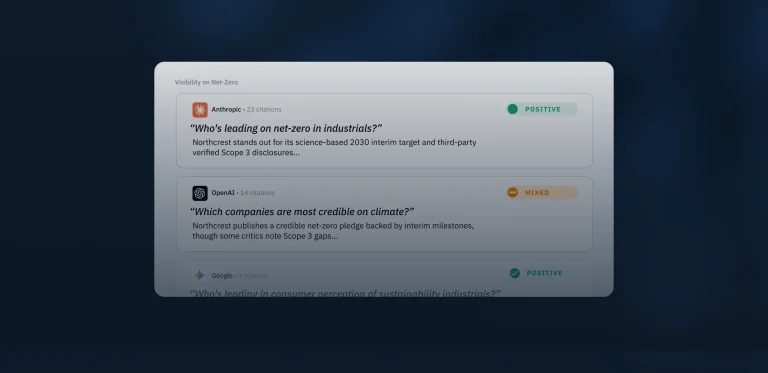
For companies, the art of storytelling is evolving quickly due to changes in the way people and machines gather information. Just a few years back, a corporate website optimized for search engines did the trick. On top of that, brands routinely posted to Twitter, Facebook, Instagram, and LinkedIn – and they pitched stories to business reporters at dailies and trade pubs. Today, those typing a query into a browser search bar are likely to see results from artificial intelligence (AI) chatbots that may or may not be indexing a corporate website. The large language models (LLMs) feeding Gemini, Copilot, Claude, and ChatGPT are becoming the new Google Search. Social platforms have been politicized, and angry comments from trolls often poison even the most innocuous posts from a CEO or company. 

The collapse of the paid media model that supported most news sites has hastened an already alarming trend of belt-tightening by debt-heavy media companies. The few remaining reporters inside once-bustling newsrooms are now chasing scandals and breaking news stories rather than features, profiles, and enterprise reporting. But demand for information about companies and what they stand for is growing exponentially.  And the stakes are enormous. Research conducted last year by 3BL, TriplePundit, Glow, and Cint found that consumers switching brands for sustainability reasons represent a $44 billion opportunity across 12 U.S. industries. This means that a significant amount of revenue is shifting towards companies that are perceived as more sustainable. Companies stand to gain a competitive and reputational advantage by actively sharing stories about reducing emissions and waste, using less water, and caring for their employees and communities. Those brands that move beyond a static, annual sustainability report and embrace an approach of always-on storytelling can measure the return on investment through employee recruitment and retention, inclusion in respected ratings and rankings, and in sales. Brand journalism, when combined with audience insights and an engagement strategy built for AI LLMs, is fast becoming a best practice for companies with good stories to tell.  

Talk to our team

Industry Insights
JULY 16, 2025

9 Tips for Communicating Social Impact Initiatives Through the Slow Summer Months


The “summer slowdown” can be a challenging time for organisations, whilst staff are on vacation, customers shift buying habits and attention spans can be limited. It can also be a time to reassess strategies, reflect on the first half of the year and plan for the next half.  But you still want to communicate your stories and company initiatives to maintain visibility and engagement through the slower months. We have a list of tips to help reach audiences who seek interesting and relevant content.

Maintain a consistent online presence by giving your initiative a permanent home on your website and announcing it on your blog. Also, post it on your socials and other owned properties. This helps keep your messaging clear and consistent whilst reaching different audiences.

Summer-friendly content is ideal for social media, such as creating short, engaging posts with eye-catching visuals or videos under 30 seconds to capture attention. Attention spans tend to be shorter in the summer, and also, people tend to be on the move, so you can use polls or ask a question to encourage quick responses that require little time commitment. Use a dedicated hashtag to create ongoing engagement and encourage employees to share posts – “The click-through rate on a piece of content is 2x higher when shared by an employee versus when shared by the company itself.”

What are your audience’s summer priorities? Try and match these to your “call-to-action.” For example, water availability could be a topic that’s important to your audience this time of year, so invite readers to join a water-saving challenge. Or, with temperatures rising, ask audiences for their tips to keep cool. 

Schedule posts ahead of time if you can, but also allow for spontaneity. This can maintain steady engagement whilst also allowing for tasks to be completed when teams are on vacation. Utilize newsletters and partner networks. Amplify your message and invite subscribers and collaborators to share your initiatives within their communities. Storytelling with testimonials, infographics, user spotlights, and case studies can emotionally connect your audience to the impact you’re making. Repurpose content. If you have longer articles, research, reports, video interviews, etc., break them down into smaller chunks to talk about a new or different angle. This also allows you to provide additional context or updates.

Host interactive experiences and user-generated content (UGC) campaigns. Things like photo contests, challenges, or quizzes related to your social impact cause encourage audience participation and creativity. Host live Q&A sessions, virtual events, or webinars. You may have more time or flexibility in the summer months to connect with your audience in real time, answering questions and sparking dialogue around your social impact goals.

Run summer-themed challenges or giveaways. This can encourage immediate participation and boost engagement

Talk to our team

Daniel Blackman returns to What the…? to talk about rethinking connection, rebuilding trust, and engaging communities where they are.
Industry Insights
JULY 10, 2025

More Than Words: How To Connect With Communities When It Feels Impossible


Daniel Blackman returns to What the…? to talk about rethinking connection, rebuilding trust, and engaging communities where they are.

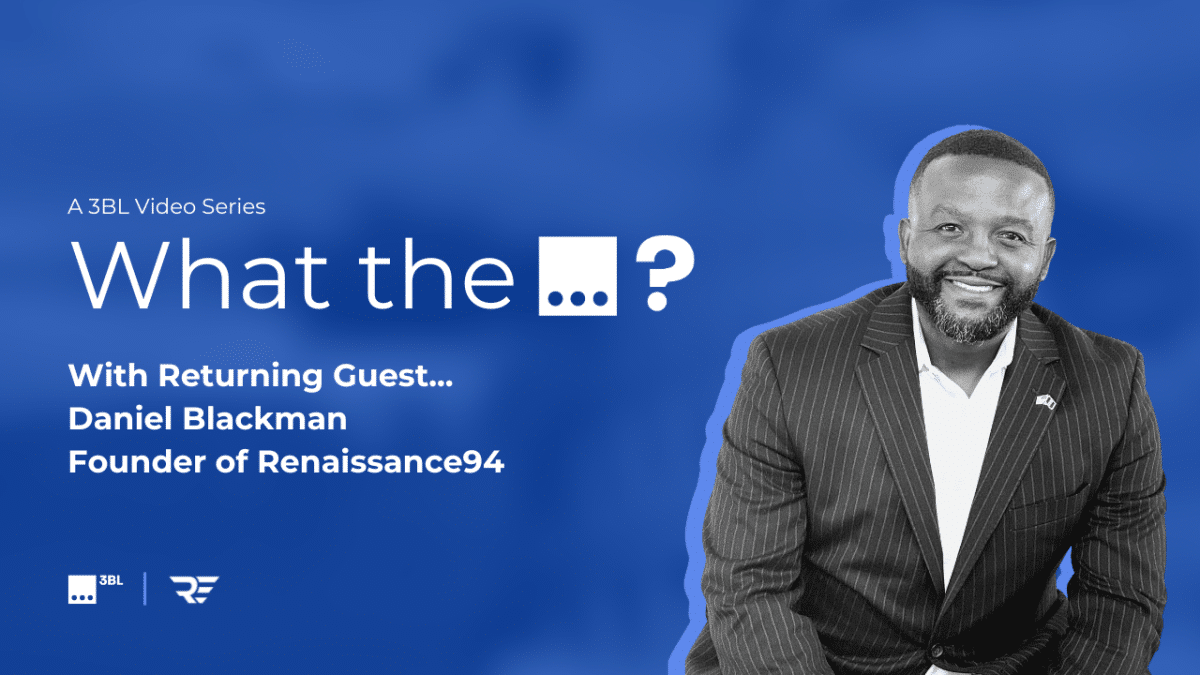
In Episode 7 of 3BL’s What the…? video series, host Mary Mazzoni welcomes back Daniel Blackman, Founder of Renaissance94, for his second appearance on our series. This time, Blackman dives into why the sustainability space continues to miss the mark on real engagement and how practitioners can start to rebuild trust and connection across communities.

Full episode here. As sustainability messaging becomes increasingly politicized, Blackman pulls no punches on where the industry has gone wrong. “We’ve seen ESG, we’ve seen sustainability — these have become more about branding than about saving lives,” said Blackman. “It’s been more about branding than about engaging communities.” He emphasizes the importance of shifting the way communicators show up and speak to people beyond their usual circles. “We need to stop speaking at and over people. We need to speak to people where they are.” Key takeaways from the conversation:

  • We’re talking — but not connecting. Sustainability professionals must meet communities where they are, both physically and emotionally, rather than delivering messages from afar or with a corporate filter.
  • Access and infrastructure matter. Many of the communities most impacted by climate issues lack the infrastructure, like broadband or transportation, to even participate in the conversation.
  • Communities want to be part of the solution. Every day, people, especially those directly affected by climate events, have valuable knowledge and lived experience. They should be seen as partners.
Click Here to Watch Episode 7 of What the…? About 3BL  3BL transforms impact and sustainability initiatives into business advantages. Since 2009, we’ve helped 1,500+ organizations — from Fortune 500s to NGOs — connect purpose with performance. Our proprietary platform delivers targeted distribution, strategic insights, and measurable analytics, while our media division TriplePundit provides solutions-focused journalism and brand storytelling support.

Talk to our team

Whether you’re a seasoned pro or writing your first media release, we have the 3BL Communications Toolkit is your go-to resource for creating compelling, credible, and click-worthy content. Click here to download and share with your communication stakeholders.
Industry Insights
JULY 9, 2025

The Top Sustainability Prompts Searched in Large-Language Models


As AI tools become mainstream in both personal and professional use, large language models (LLMs) like ChatGPT, Gemini, and Claude are becoming go-to resources for learning, ideation, and even ESG strategy. But what exactly are people asking about sustainability?

Here’s a breakdown of the most-searched sustainability-related prompts, and what they reveal about public and corporate priorities.

1. “What is ESG and why does it matter?”

Why it’s trending: As new regulations like the EU CSRD and SEC climate disclosure rules go into effect, professionals across sectors are seeking quick, clear explanations of ESG — environmental, social, and governance factors—and how they relate to business risk and reputation.

✅ LLM tip: Most LLMs now deliver tailored ESG definitions by sector (e.g., ESG for finance vs. manufacturing), helping non-experts get up to speed fast.

2. “How can I make my business more sustainable?”

Why it’s trending: SMBs and internal departments want actionable ideas that go beyond plastic straws or Earth Day campaigns. They’re looking for help with energy efficiency, sustainable sourcing, and waste audits.

✅ LLM tip: LLMs are being used to generate checklists, policy templates, and tailored roadmaps to reduce carbon footprints or improve supply chain transparency.

3. “Examples of successful corporate sustainability initiatives.”

Why it’s trending: Professionals are researching case studies to benchmark their own programs or pitch ideas to executives. Interest is highest in net-zero strategies, circular business models, and DEI-linked community investments.

✅ LLM tip: When prompted well, LLMs can surface concise summaries of sustainability programs from companies like Patagonia, IKEA, Unilever, or Microsoft — without the greenwashing.

4. “How do I measure sustainability impact?”

Why it’s trending: Measurement is a sticking point for many organizations. Users are asking about carbon accounting tools, materiality assessments, and ESG KPIs.

LLM tip: Advanced prompts can now generate sample metrics, GRI-aligned reports, or comparisons of frameworks like SASB vs. CDPgreat for sustainability analysts and CSOs.

5. “AI for climate solutions”

Why it’s trending: There’s a growing hunger for insight into how AI can accelerate climate action — whether through smart grid optimization, emissions modeling, or predictive analytics for climate risk.

LLM tip: Prompts about “AI for good” are popular in both the nonprofit and tech sectors. LLMs are helping users explore tools like satellite-based monitoring, regenerative farming algorithms, and carbon trading platforms.

LLMs are rapidly becoming sustainability co-pilots that are helping businesses translate big ESG goals into operational plans. But the quality of the output depends on the quality of the questions.

Talk to our team

3BL News
JULY 1, 2025

3BL’s Publishing Partner Network Welcomes New Organizations, Amplifying Purpose-Driven Content to Engaged Audiences


Since 2009, 3BL has developed an exclusive network of organizations looking to amplify their social impact stories as well as help amplify the stories from other organisations in the space.

By hosting our news feed on their website, our partners allow us to reach purpose-driven, influential audiences across various industries. And in return, they are able to use our platform to push out their own content across our entire distribution network and access analytics to determine how their content performs.

We are pleased to welcome WSLA (Women in Sustainability Leadership Awards) and Green Bronx Machine to our network.

🏅 WSLA – The WSLA Alumnae Group, a 501(c)(3) charitable organization, is a community of past Women in Sustainability Leadership Award winners: over 135 of the most influential women trailblazers who have become a powerful force in the profession of creating a more sustainable world. The group’s annual awards program, summits, service activities and mentorship opportunities continue to pave the way in sustainability and for future leaders in the field. See their recent news here.

🌾 Green Bronx Machine – An award-winning, nationally acclaimed non-profit that builds healthy, equitable, and resilient communities through inspired education, local food systems, and 21st Century workforce development. Dedicated to cultivating minds and harvesting hope, their school-based model incorporates urban agriculture and Tower Garden supported by their whole-school curriculum aligned to key school performance indicators to grow high performing schools and happy, healthy children. See their recent news here and here. They are in great company, other members of our partner network include: Net Impact, America’s Charities, Ceres and UN Global Compact Network US.

If you’re interested in learning more about our Publishing Partner network, please click here get in touch.

Talk to our team